
How Team Culture Drives Development Success
In software engineering, code doesn’t exist in isolation; in fact, it’s greatly influenced by the people who develop it, the procedures they adhere to, and the setting in which they work. In short, development at all levels is affected by the team culture. Long-term success, code quality, and productivity are all influenced and boosted by a solid, encouraging team culture.
| Key Takeaways: |
|---|
|
Let us explore the true meaning of team culture, its importance for software development, and the proactive ways leaders influence it.
Understanding Team Culture
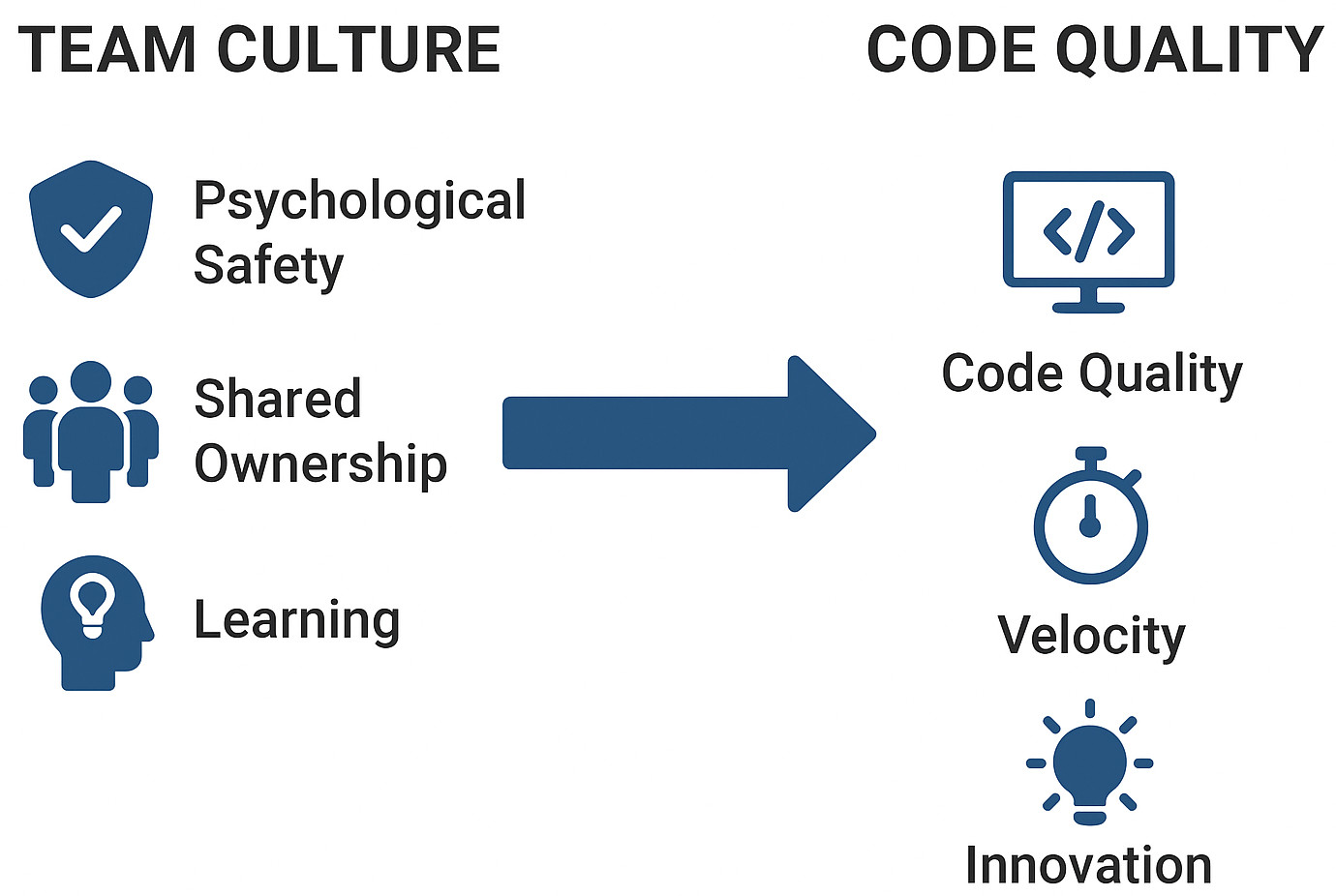
At the foundation, team culture connotes the common beliefs, customs, and practices that guide how individual team members work together. It manifests in the way teams respond to criticism, acknowledge errors, and collaborate under duress. The culture of a team can either encourage openness and ongoing development or it can encourage fear and unspoken dangers.
Culture is not an abstract idea when it comes to the context of software development. “Culture problems become code problems,” as engineering leaders often emphasize. Teams that are under pressure, hurried, or discouraged from voicing concerns will almost always take shortcuts. This will reflect in the final product as inadequate documentation, fragile tests, or an increase in defect rates.
The Role of Team Values in Development
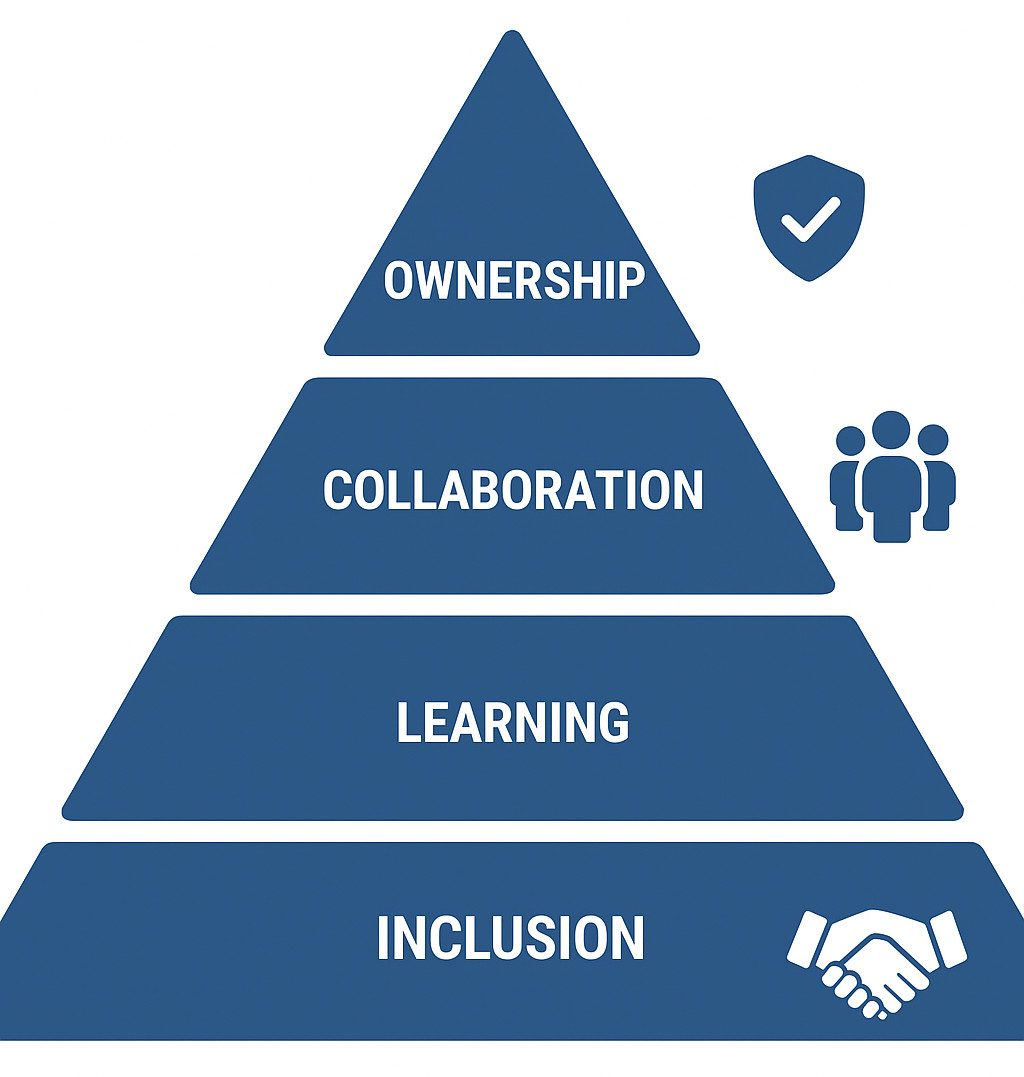
- Ownership and Accountability: Developers are in charge of more than just providing features; they are also responsible for the quality of code. Maintaining features long after they are released is another facet of ownership. Accountability-focused teams often use internal dashboards or metrics to monitor their own performance, which decreases the need for external policing.
- Collaboration over heroics: Teams recognize group accomplishments rather than praising last-minute solo work. Knowledge silos, burnout, and bottlenecks are often the consequence of hero-driven development. Collaboration, on the other hand, guarantees continuity because knowledge is widely shared, enabling others to step in without issues if one team member is unavailable.
- Continuous Learning: There is always room for improvement with each incident, sprint, or release. This includes not only formal retrospectives but also unofficial peer coaching, learning opportunities from code reviews, and trying our new tools or methods. Failures are converted from career hazards to opportunities for development when a team upholds learning.
- Respect and inclusivity: Regardless of position or background, everyone feels comfortable speaking up about their concerns. Respect also extends to time and workload, valuing sustainable work habits avoids teams from normalizing overtime as a daily scenario. Inclusion makes sure that different perspectives influence decisions, which improves problem-solving.
When these values are constantly reinforced, they direct technical decisions, encourage delivery speed, and guide long-term maintainability. Teams with robust values also find it simpler to onboard new members, since values act as a cultural compass that guides behavior without requiring micromanagement.
Supportive Teams Drive Better Outcomes
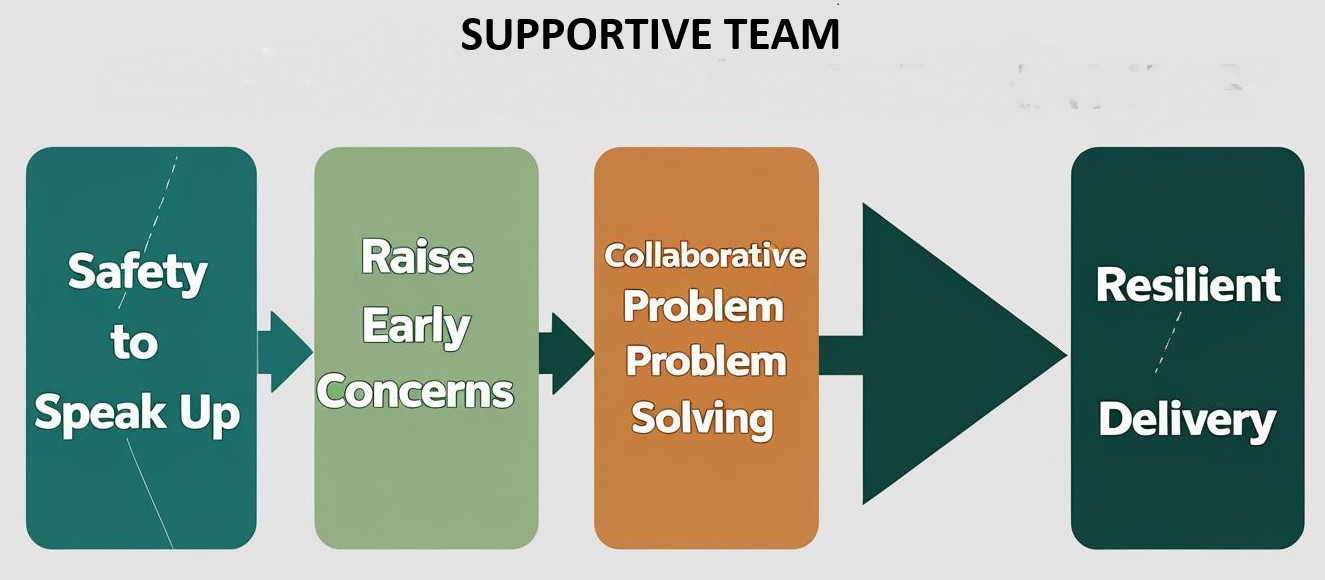
- Early issue detection: Developers are more inclined to detect scalability issues, hidden hazards, or technical debt early on when they feel safe. A supportive environment, for instance, helps a junior engineer to detect potential problems in a design without fearing negative reactions. Months later, costly rework is avoided due to this early intervention.
- Faster problem solving: Openly collaborating teams bring together a range of expertise instead of relying solely on isolated troubleshooting. In cross-functional teams, where backend, frontend, and QA viewpoints are all important, this is especially critical. Supportive teams use mobbing and pair programming as real problem-solving methods rather than as performance evaluation tools.
- Resilience under duress: Culture is put to the test more often by deadlines, outages, and client escalations rather than during the calm periods. Stress leads to stronger coordination in supportive teams, as members volunteer to support one another. Post-mortems become constructive feedback that is input back into improved processes rather than being used to point fingers.
- Higher engagement and reduced attrition: Developers are less likely to quit or burn out when they know their team is backing them up. Stronger team cohesion, increased velocity, and in-depth domain expertise are all consequences of this stability.
In reality, a supportive culture works as the unseen safety net that ensures sustainability, speed, and quality go hand in hand.
Building Team Culture in Software Development
- Define cultural guardrails: Establish cultural boundaries by defining expectations for incident response, code reviews, and the “definition of done.” By doing this, misunderstandings about what constitutes “good work” are prevented, and culture becomes concrete rather than abstract. A clear standard for quality is defined, for example, by defining what no code merges without automated testing.
- Establish collaborative practices: Shared ownership is encouraged by pair programming, blameless post-mortems, and cross-functional backlog improvements. These rituals function as reinforcing loops, reminding team members that collaboration is not just optional but vital to success.
- Acknowledgement and reward alignment: Culture is reinforced by emphasizing actions that embody team values, such as cross-team support or mentoring. Instead of providing general praise, recognition should be specific, such as “You shared your expertise and skills to help a teammate during sprint planning.”
- Define goals clearly: Culture is fortified by a shared vision, while it is weakened by priorities that are out of alignment. In addition to being aware of what they are building, teams should understand why it is vital. A developer is more likely to make a drastic contribution and match choices with business strategy if they understand the client’s issue that necessitates a feature.
- Hire for culture-add: Bring in individuals who uplift the values of your team along with technical expertise. Cultural gaps can be filled, and current strengths can be boosted by someone who organically shares knowledge or challenges in a respectful manner.
These steps provide a secure scaffolding that maintains culture alignment even during times of stress or growth. Culture is built through daily micro-decisions.
Positive Team Culture and Its Measurable Impact
- Increased retention: When workers feel supported and appreciated, they are more likely to stay in the same organization. Retention maintains important institutional knowledge in addition to decreasing recruiting expenses. In order to prevent making the same mistakes twice, long-tenured engineers often take on the role of guardians of architectural context.
- Higher engagement: Developers who are actively involved are significantly more productive. Engagement is about feeling independent, purposeful, and in control, not about advantages. High-engagement teams demonstrate decreased rates of incomplete work and optimized sprint predictability.
- Improved code quality: Faster recovery and reduced bugs are all the consequences of a culture that prioritizes testing and craftsmanship. Habits such as documenting APIs, validating code for readability, and constant refactoring are all instances of quality culture.
- Innovation: Teams that feel psychologically secure can try new things more freely, which results in innovative solutions. Developers are more willing to propose daring architectural changes or innovative testing frameworks that could have major long-term benefits when they feel supported.
- Client satisfaction: In the end, the real-time user is influenced by culture. Clients quickly notice reliable products with thoughtful functionalities, reduced defects, and on-time delivery when there is a positive culture in place.
These cultural advantages can be quantified using metrics such as cycle time, employee Net Promoter Score (eNPS), defect rates, and retention. Thus, culture has a direct effect on business outcomes.
Practical Steps to Improve Workplace Culture
- Conduct meaningful retrospectives: Ensure that results lead to actions rather than just winding conversations.
- Maintain speed and quality in check: Steer clear of quick wins that lead to long-term technical debt.
- Encourage education and monitoring: Peer reviews and official mentoring programs encourage long-lasting knowledge transfer.
- Measure what you value: Assess code review health, test coverage, and defect rates along with velocity.
Once these behaviors become apparent and regular, they encourage changes in culture.
How to Improve Company Culture in Development Teams
- Investing significantly in developer experience to improve company culture.
- Morale is impacted negatively by antiquated tools and inconvenient procedures.
- Encourage inclusivity at the highest levels. Promotion standards, communication norms, and hiring processes all communicate what is valued.
- Align engineering procedures with business goals. Culture is undermined by unrealistic deadlines and regular last-minute scope changes.
Focus on how applicants can improve the existing culture rather than merely replicating it.
Why Software Development Team Culture Matters
- Trust among teammates.
- Shared values and goals.
- Effective coordination of expertise.
A robust culture amplifies technical skills. Even the best teams are wasted by a weak culture,
Team Culture Development as a Continuous Process
- Onboarding: Every new employee provides a chance to either weaken or strengthen the company culture. Values, customs, and expectations should all be clarified during structured onboarding. Mentoring programs or buddy systems aid the rapid assimilation of new members.
- Scaling teams: As the number of team members increases, rituals that were previously informal may need to be codified. Lightweight retrospectives could mushroom into formal quarterly health checks, while daily stand-ups could become asynchronous check-ins. The size and complexity of the team should be taken into consideration when leaders reexamine their current processes.
- Handling crises: Culture is stress-tested most during outages, layoffs, or tough deadlines. While toxic cultures collapse under stress, teams with a healthy culture view crises as opportunities for unity. Defining unambiguous communication guidelines and escalation routes ensures that crises don’t impact confidence.
- Evolving practices: What was efficient for a small team of five might not be efficient for fifty. In order to build a culture, old customs must be eliminated and replaced with more mature ones. For instance, as systems scale, it becomes vital to include cross-team architecture reviews.
- Feedback loops: The information needed to change culture is provided by routine surveys, one-on-one discussions, and retrospective health checks. Teams that value continuous improvement are those that pay attention to and act upon feedback.
Understanding that culture is never “done” is important to developing a sustainable culture. Culture needs continuous upkeep to remain in line with corporate goals and values, much like codebases need to be refactored.
Where Testing Culture Fits
How teams approach testing is one of the biggest neglected aspects of building a culture within the team. Cultural rifts deepen if testing is considered as a bottleneck or as an independent duty. However, when testing is accepted as an element of the “definition of done,” it enhances ownership and teamwork.
- Shared accountability for quality: Not just QA is accountable for the final product, everyone is.
- Early testing: Issues are detected early on rather than at the release gates.
- Collaboration over blame: When tests fail, an investigation is conducted rather than a finger-pointing process.
Automation is an absolute necessity in this scenario.
Culture is the Hidden Driver of Development Success
The most successful engineering teams have a positive team culture that makes excellence sustainable, along with having talented developers. Every small line of code, every release, and every client communication reflects a culture that prioritizes teamwork, accountability, and ongoing learning.
Improved retention, rapid delivery, and increased quality software are all observed by leaders who treat culture as a basic element of engineering strategy. Along with it, teams can remove friction points and build upon cultural strengths by using modern solutions. Because in the end, team culture isn’t distinct from development, it itself is development.
 |