
What is Requirement Engineering Process?
To build a successful software, you need to be clear about what needs to by built and why. The requirement engineering process is what helps achieve this. It is a methodical approach to gather, analyze, validate, and handle these requirements. You might have seen the repercussions of not doing due diligence with requirements.
In this article, let’s look at ways to make requirement engineering a success and also learn how it can benefit the software development lifecycle.
| Key Takeaways: |
|---|
|
What Is Requirements Engineering?
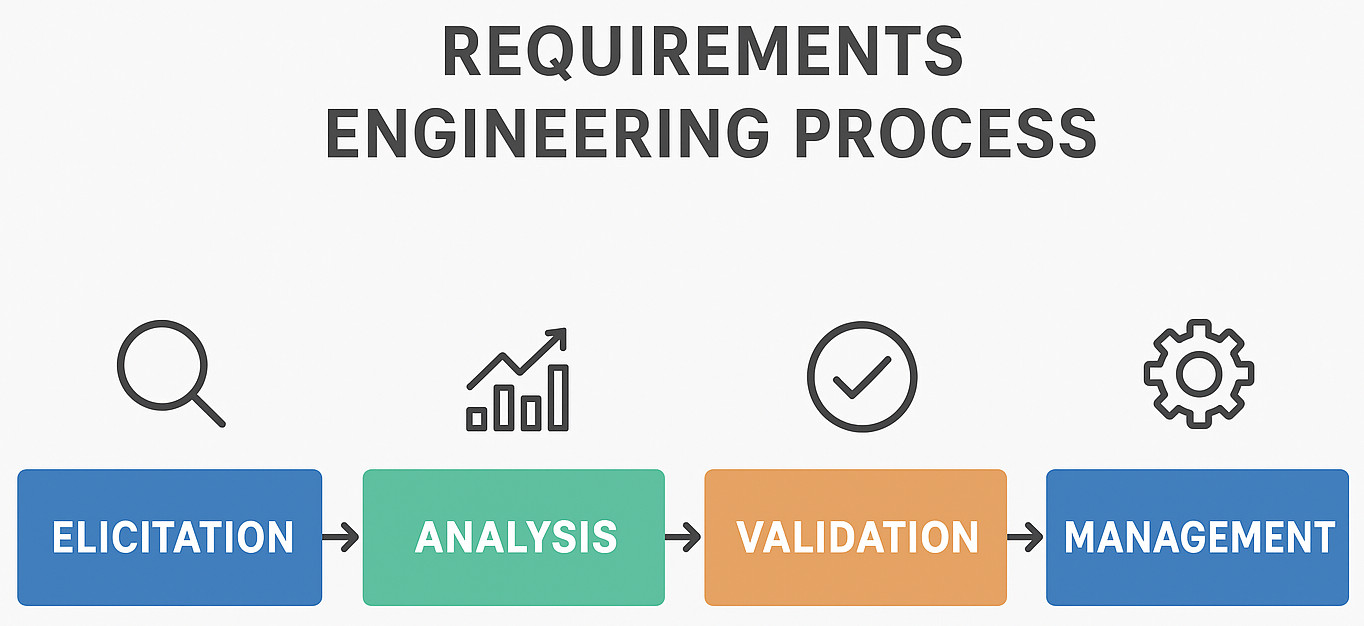
The structured process of identifying, recording, analyzing, validating, and handling stakeholder needs and expectations for a system is called requirements engineering, or RE. In simpler terms, it ensures that teams build the right product for the right users in the right manner.
It includes collecting needs from stakeholders, defining those needs, clearly recording them, validating them with users, and managing changes over the course of the lifecycle.
Why Is the Requirement Engineering Process Important in Software Engineering?
Requirements work as the basis for design, development, and testing, the requirements engineering process is fundamental to software engineering. Every downstream activity suffers if it is unclear or incorrect.
- Preventing Project Failure: A big percentage of software project failures are caused by poorly established requirements, as per research and industry experience. Costs later on are inflated by misunderstandings at this initial stage.
- Improving Stakeholder Alignment: For development teams, business executives, end users, and testers, well-established requirements function as a shared contract.
- Reducing Rework and Costs: An issue is easier and less costly to resolve the earlier it is found during the requirements stage.
- Ensuring Product Quality: Performance, usability, and reliability are non-functional requirements that impact system robustness and user experience. Efficient RE ensures that these are not neglected.
- Enabling Better Planning: Well-defined requirements are needed for scheduling, resource utilization, and effort estimation.
Stages in the Software Engineering Process Where RE Fits
- Feasibility study
- Requirements Engineering Process
- Design
- Development / Implementation
- Testing
- Deployment
- Maintenance
The next step is the Requirement Engineering Process, which works as the base for nearly everything that comes after. Every subsequent step is at risk if the requirements phase is defective.
The Requirement Engineering Process: Step-by-Step
- Feasibility Study
- Requirements Elicitation
- Requirements Analysis & Specification
- Requirements Validation
- Requirements Management
Below is a detailed explanation of each stage.
Feasibility Study
- Technical Viability: Is it possible to build it using existing technology?
- Economic Viability: Is it economical?
- Operational Viability: Will it be leveraged and beneficial by end users?
- Legal Viability: Are there issues with regulations or compliance?
- Schedule Viability: Will it be delivered on time?
At this point, ensuring that the project is worthwhile is more important than establishing requirements.
Requirements Elicitation
Gathering information from stakeholders to understand what the system should do is the basis of the requirement engineering process.
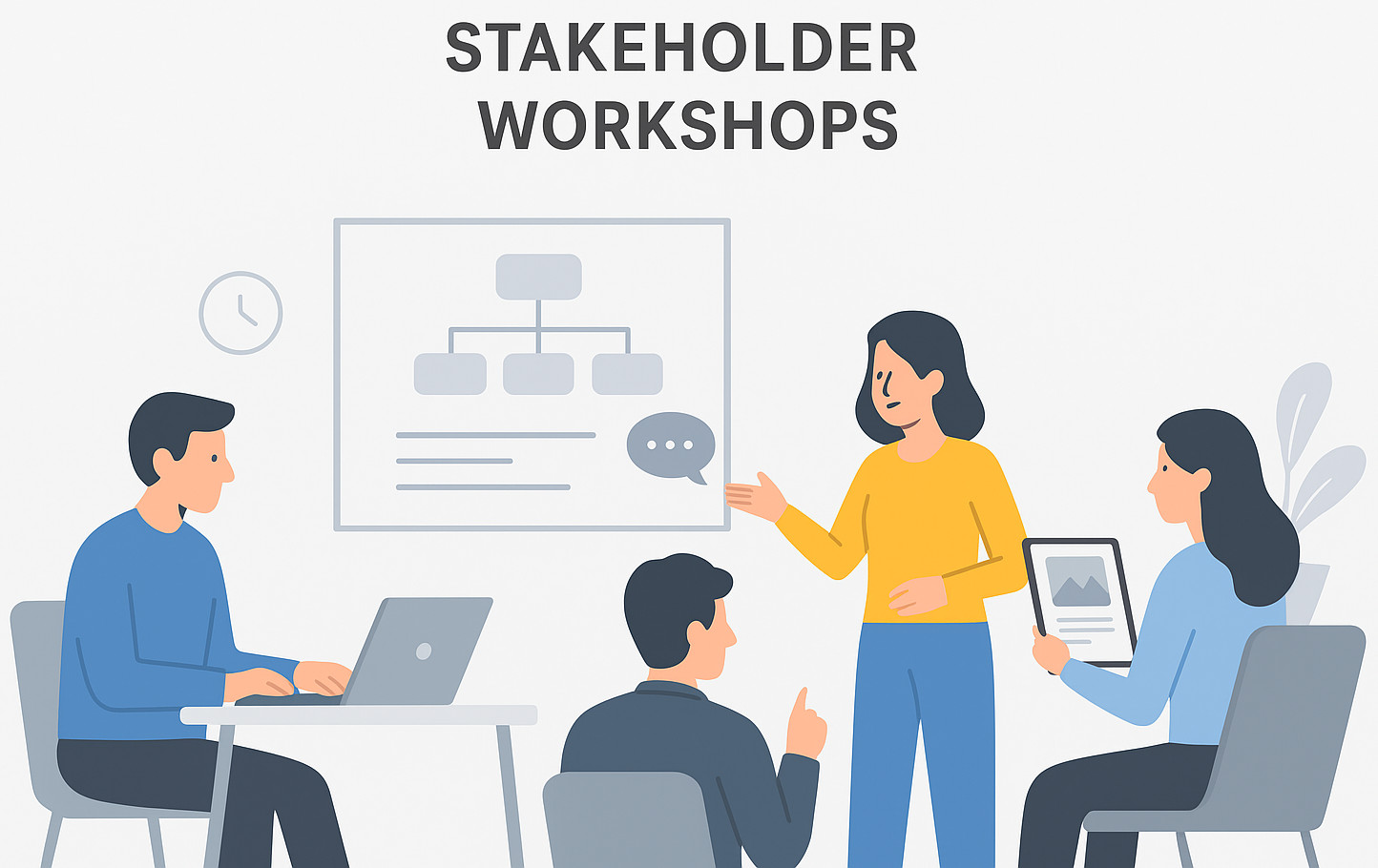
Why is elicitation so crucial?
People rarely use precise, holistic, and technically accurate language to express exactly what they want. Teams need to identify what users truly need, not just what they claim to want.
Common Elicitation Techniques
- Interviews (structured or unstructured)
- Workshops and brainstorming sessions
- Observation and job shadowing
- Surveys and questionnaires
- Document analysis
- Prototyping
- Use case discovery
Elicitation is repetitive, not a one-time meeting. As understanding expands, new questions emerge, and stakeholders sharpen their vision.
Requirements Analysis and Specification
- Sorting, categorizing, and prioritizing
- Identify duplicates
- Resolve contradictions
- Group-related requirements
- Determine what is essential versus optional
- Prioritize based on value, risk, and effort
Types of Requirements
- Functional requirements: What the system needs to be able to do. For example, The system will allow users to modify their passwords.
- Non-functional requirements: How the system must perform. For example: Performance, security, usability, scalability, maintainability, and dependability.
Creating the Requirement Specification Document
- Product Requirements Document (PRD)
- Software Requirements Specification (SRS)
- Business Requirements Document (BRD)
The documentation may be lightweight (user stories, acceptance criteria) or detailed (use cases, diagrams, models), relying on the methodology (Waterfalls vs. Agile).
- Use case diagrams
- State machine diagrams
- Data flow diagrams (DFDs)
- User stories with acceptance criteria
- Entity-relationship diagrams
The specification needs to be clear, unambiguous, testable, and consistent. A poor specification leads to misinterpretation later on.
Requirements Validation
Validation addresses the question “Are we building the right product?”
This step examines the requirements to ensure they accurately represent stakeholder needs and are ready for design and development.
Common Validation Methods
- Stakeholder reviews
- Requirements walkthroughs
- Prototyping for visual validation
- Test case generation (to check testability)
- Traceability matrix checks
Validation secures against building features that no one demanded or eliminating vital information.
Requirements Management
Requirements are not static. The requirements evolve as markets evolve, organizations reorganize their priorities, and new customers join. Continuous management is therefore the last phase in the requirements engineering process.
Key Activities for Requirements Management
- Change control is the process of examining, approving, or rejecting changes.
- Versioning is the process of ensuring that everyone works from the most recent set of requirements.
- Traceability is the process of linking each requirement to design, implementation, and testing.
- Impact analysis is the process of calculating the cost and impact of changes.
- Communication is the process of keeping stakeholders informed.
Instead of being chaotic or ad hoc, the goal is to make sure that changes are managed, recorded, and relevantly communicated.
Tools Involved in Requirement Engineering
With the help of tools that support documentation, traceability, version control, collaboration, and validation, teams can accelerate the RE process.
Requirements Management Tools
- IBM DOORS
- Jama Software
- Modern Requirements
- Helix RM
- Visure Requirements
Collaboration and Documentation Tools
- Confluence
- Notion
- Google Workspace
- Microsoft OneNote
Modeling and Diagramming Tools
- Lucidchart
- draw.io
- Visual Paradigm
- Enterprise Architect
Prototyping Tools
- Figma
- Adobe XD
- Sketch
- Balsamiq
Project Tracking Tools
- Jira
- Azure DevOps
- Trello
Using tools isn’t compulsory, but for medium-to-large projects, they significantly decrease ambiguity and confusion.
Requirement Engineering in Traditional vs Agile Development
- Requirements are documented in detail up front.
- Changes are costly and often discouraged.
- The SRS works as the main guide for developers and testers.
- Long documents are replaced by user stories.
- Requirements evolve over time.
- Priorities are established by continuous stakeholder involvement.
- Iterative releases, sprints, and backlogs encourage flexibility.
Common Challenges in the Requirement Engineering Process
- Scope Creep: Projects exceed budget and schedule when requirements keep expanding without adequate assessment.
- Miscommunication Between Stakeholders: Conflicting demands or ambiguous expectations may exist among different stakeholders.
- Poor Traceability: Teams risk losing track of dependencies if requirements and implementation are not correctly linked.
- Inadequate Stakeholder Involvement: Requirements might not respond to the real issues if users are not involved immediately.
- Overlooking Non-Functional Requirements: Sometimes teams prioritize features over usability or performance.
Good communication, relevant tool use, and methodical requirement management are necessary to overcome these hurdles.
Best Practices for an Effective Requirement Engineering Process
- Involve Stakeholders Early and Often: Accurate recording of changing needs requires continuous engagement.
- Document Requirements Clearly: Make use of examples, clear language, and illustrations to do away with ambiguity in RE.
- Validate Requirements Before Building: Test cases, walkthroughs, and prototypes can aid in detecting gaps early on.
- Maintain Traceability: To avoid surprises later, link requirements to implementation and testing.
- Encourage Collaboration: Requirements should be jointly improved by cross-functional teams that include developers, testers, analysts, and designers.
- Prioritize Based on Value: Not every requirement is equally important. Make sensible decisions.
- Keep Requirements Organized and Versioned: When making changes, make use of modern tools to ensure accuracy and consistency.
The Role of Requirement Engineering in Product Success and User Experience
Aligning Product Vision With User Needs
The difference between what consumers really need and what businesses believe they want is one of the main reasons for product failure. Requirements engineering reduces this gap with careful elicitation, analysis, and verification.
Teams gain a good understanding of workflows, pain points, and motivations. This is possible by involving users early via feedback loops, interviews, prototyping, and validation workshops. Doing this significantly reduces the possibility of releasing features that are worthless.
Enhancing User Experience Through Clear Non-Functional Requirements
Non-functional requirements (such as performance, dependability, usability, accessibility, and security) define user satisfaction, whereas functional requirements specify system behavior. Even if a system satisfies all functional requirements, users may still become annoyed if it is unreliable, slow, or confusing.
By identifying, prioritizing, and shifting these quality attributes into quantifying criteria, the requirements engineering process ensures a more seamless and intuitive user experience.
Ensuring Scalability and Future-Proofing
As businesses expand and technology evolves, modern software needs to evolve as well. Teams can predict integration requirements, detect scalability needs early, and get ready for future enhancements with efficient requirements analysis and management. This proactive strategy ensures the product’s viability as new needs emerge and prevents costly architectural changes down the road.
Improving Cross-Functional Collaboration
Engineering, quality assurance, design, business stakeholders, and marketing all use requirements as a common language.
- Developers understand limitations and priorities.
- Product managers use documented needs to support decisions.
- Testers create detailed test cases.
This unified approach enhances delivery efficiency and reduces misalignment.
Driving Better Decision-Making With Traceability
An important component of RE, traceability sets a link between requirements and their designs, test cases, origins, and code modules.
- Impact analysis when stakeholders request changes
- Understanding the “why” behind each feature
- Ensuring regulatory compliance in industries like healthcare or finance
- Identifying gaps or missing features before launch
Effective traceability improves decision-making, decreases uncertainty, and supports long-term maintainability.
Putting It All Together: Why Requirement Engineering Matters
The very base of successful software development is the requirement engineering process, which is not a bureaucratic burden. Each stage of a project’s lifecycle is affected by RE, from understanding user needs to ensuring technical alignment and successfully managing changes.
- Increased stakeholder satisfaction
- Clearer project direction
- Faster delivery cycles
- Reduced rework and cost overruns
- Higher quality software
- Better alignment between business strategy and technical execution
When done wrong, it leads to miscommunications, hasty fixes, overspending, and system malfunctions. Understanding the requirement engineering process is not just a competitive benefit but also a necessity in the fast-paced world where software fuels almost every business.
Conclusion
Software development is guaranteed to be in line with real business needs via the methodical, disciplined, and collaborative Requirement Engineering Process. Knowing these phases allows you to offer better, more efficient solutions, regardless of your role as a developer, project manager, product owner, or business analyst.
 |